
MGA Thermal and Knode commence FEED study for Australia’s largest industrial thermal storage project
$2.9 million ARENA-backed study marks first in active pipeline of industrial decarbonisation projects
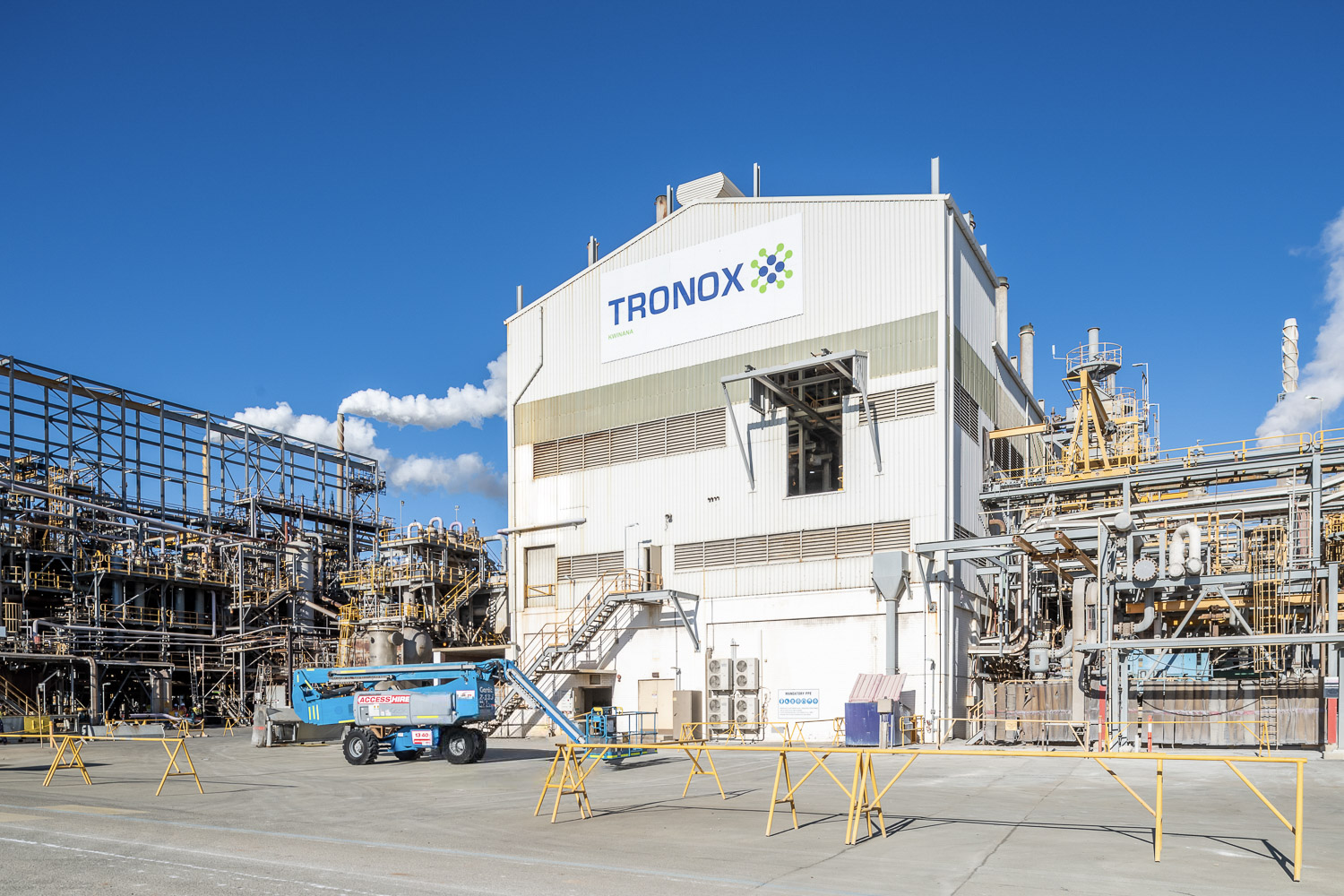
MGA Thermal has commenced a Front-End Engineering and Design (FEED) study for a 195 megawatt-hour electro-thermal energy storage (ETES) project at Tronox, the global chemicals and mining company. The country's largest industrial-scale thermal storage project is being developed by Australian company Knode and co-funded by a $2.9 million agreement with the Australian Renewable Energy Agency (ARENA).
The project will commence construction in 2027 with support from global engineering heavyweight GHD. It will reach commercial operation by 2028 where it will deliver approximately 20 tonnes per hour of renewable steam to Tronox’s Kwinana facility under a Heat as a Service agreement. The project’s initial rollout will allow Tronox to avoid 38,000 tonnes of CO2 emissions per annum, with the potential to eliminate fossil fuel usage if deployed at scale.
The FEED study marks a significant milestone for the company's flagship project, building on the pre-feasibility completed by MGA Thermal and Knode in August last year. The project reinforces MGA Thermal’s industry momentum following its $17 million capital raise finalised in March 2026. This raise, alongside a separate $3.25 million funding grant secured from ARENA for five separate FEED studies, will power the company’s active industrial projects pipeline.
Mark Croudace, CEO of MGA Thermal, said: “Commencing the FEED study is a significant step — it’s where engineering challenges are resolved, and the pathway to FID and construction becomes real. This project is the first of several we are actively developing, and it demonstrates that MGA Thermal’s technology is ready to scale across industrial and manufacturing sectors.”
MGA Thermal’s ETES technology stores low-cost renewable electricity in proprietary MGA Blocks — modular, durable, and energy-dense blocks engineered to store energy as latent heat. The stored energy is recovered to produce high-grade process steam on demand, enabling industrial facilities to operate continuously on renewable energy without fossil fuel backup.
Chris Nelson, CEO of Knode, said: “Progressing to the FEED stage is incredibly important, not just for our project with MGA Thermal, but for the fact that it demonstrates a viable way to electrify heavy industry. Keeping industries like mineral processing, refining, and materials manufacturing in Western Australia is going to be highly dependent on being able to decarbonise economically.”
The 2025 pre-feasibility study confirmed that MGA Thermal’s ETES technology will achieve price parity with traditional fossil fuel technologies at an industrial scale, a crucial milestone for the technology’s rollout.
"Industrial operators have been waiting for clean energy to make economic sense at their scale," continued Croudace. "Price parity with fossil fuels has been the bar. We have cleared it. Now, with Knode, we're building. While the upfront investment is significant, first movers will reap the benefits, leveraging available funding to lock in lower long-term energy costs and reduce exposure to rising fossil fuel prices.”
In the media
Energy Storage News: MGA Thermal begins FEED study for 195MWh thermal energy storage system in Australia
Energy Source & Distribution: Largest industrial thermal storage project gets underway
pv magazine: Australia’s largest industrial thermal storage project begins FEED study
Renew Economy: Australia’s largest industrial thermal storage project takes next “significant step”
New.E (Hunter New Energy): Industrial heat project puts Newcastle technology at the centre of fossil fuel replacement plans
Mining.com.au: MGA takes on Australia’s largest industrial thermal storage project
Process Technology: MGA Thermal announces major industrial thermal storage project
Eco Voice: MGA Thermal and Knode commence FEED study for Australia’s largest industrial thermal storage project
Streamline: Tronox Secures Multi-Million Grant For Massive Electro-Thermal Storage Facility
Green Review: MGA Thermal starts FEED study for Australia’s largest industrial thermal storage project
Hunter Headline: Newcastle clean-tech developer MGA Thermal commences design study for major industrial energy project