
Energy Security in a Volatile World: Why Industry Must Shift from Fossil Fuels to Renewable Electricity
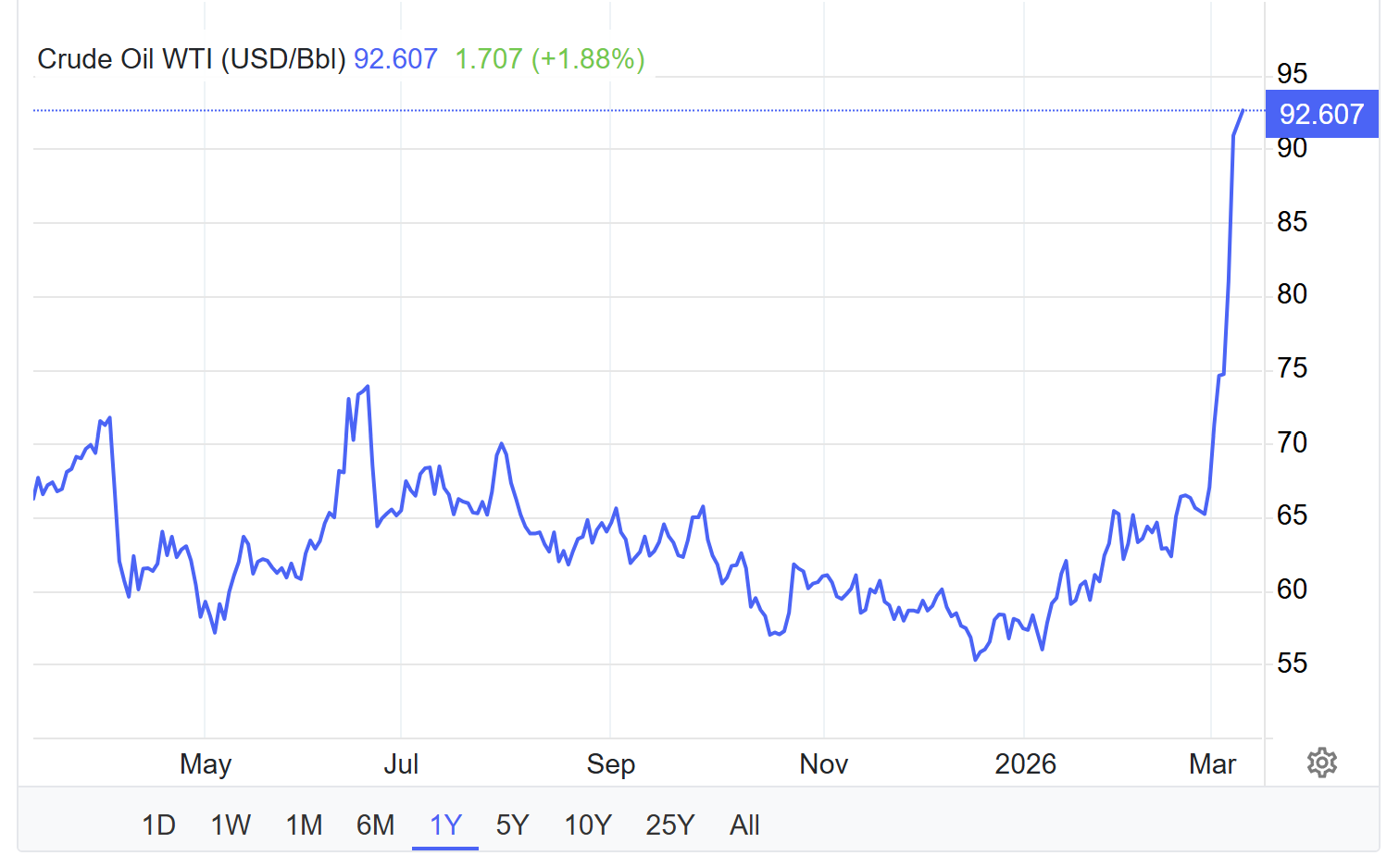
Crude Oil Price Chart for the 6 months to 9 March 2026, showing the immediate spike in the price of crude oil following geopolitical conflict in the Middle East.
Global geopolitical instability over the past decade has made one thing clear: businesses that rely on fossil fuels are exposed to significant risk.
For manufacturers dependent on heat, steam, and high‑temperature processes, this vulnerability is even sharper. When geopolitical shocks hit, oil and gas prices can surge overnight, eroding margins, disrupting production, and undermining competitiveness.
Forward‑looking industrial leaders are discovering a compelling pathway to greater resilience and cost stability: electrifying their thermal processes using renewable energy and thermal energy storage.
Why Fossil Fuels Create Structural Risk
Industrial sectors such as food manufacturing, chemicals, mining, and building materials have long depended on diesel, LPG, and natural gas. But these fuels come with three unavoidable challenges:
Global price volatility - Oil and gas are traded internationally, meaning conflicts, supply disruptions, or shipping constraints can trigger sudden price spikes. Manufacturers feel the impact immediately through higher operating costs and squeezed margins.
Geopolitical dependence - Australia imports most of its oil and competes with global buyers for gas. When international LNG prices rise, domestic prices often follow, making long‑term planning difficult.
Rising long‑term costs - As economies decarbonise, fossil‑fuel systems face increasing pressure from carbon pricing, compliance requirements, and infrastructure phase‑outs.
The Russia–Ukraine war demonstrated how quickly global markets can destabilise, with energy prices surging to decade high levels. We are already seeing the immediate effects of recent conflict in the Middle East with energy prices surging by almost 50% compared to the past 6 months, exposing the fragility of fossil‑fuel‑dependent economies and industries.
Why Renewable Electricity Changes the Equation
Australia has an abundance of cheap, renewable energy resources, which gives us greater sovereignty and security over its supply. Renewable electricity:
isn’t reliant on global commodity markets
doesn’t spike during geopolitical crises
continues to fall in cost over time
For manufacturers, electrifying heat offers a pathway to long‑term cost stability and greater energy resilience.
The Role of Thermal Energy Storage
Heavy industry needs reliable and continuous supply of heat. Thermal energy storage (TES) is a storage technology that can firm intermittent renewable energy supply. TES enables manufacturers to:
electrify high grade process heat
dispatch that heat on demand and around-the-clock
reduce reliance on fossil fuels
minimise electricity costs through load shifting
TES allows factories to run on affordable, reliable and sustainable energy, without any exposure to international geopolitical risks.
How Electrification Builds Resilience
Shifting thermal processes to renewable electricity supported by storage delivers clear advantages:
Predictable energy costs - Renewables are not exposed to global commodity markets.
Reduced crisis risk - Businesses have lower exposure to oil and gas price shocks.
Stronger competitiveness - Stable energy costs improve planning, pricing, and investment confidence.
Decarbonisation alignment - Electrified heat significantly reduces emissions and supports ESG commitments.
Greater national energy sovereignty - Local renewable power reduces reliance on volatile international supply chains.
A More Secure Future for Australian Industry
As global volatility continues and fossil‑fuel markets remain unpredictable, electrifying industrial heat is becoming a commercial necessity. Renewable electricity paired with thermal energy storage offers manufacturers a way to stabilise costs, strengthen resilience, and lead Australia’s next era of industrial innovation.